Book Review for A New Introduction to Counselling and Psychotherapy – Text version
- Tell us about your book.
It’s called A New Introduction to Counselling and Psychotherapy: Embedding Context, Diversity, and Equity into Practice. It’s a bit of a long title, but it reflects the book’s scope. It’s a comprehensive (nearly 500-page) and practical textbook that offers a mainstream introduction to personal and professional development, theory, skills, practice, and advocacy in counselling and psychotherapy. It’s for all helpers, students, lecturers and therapists, but it’s primarily positioned for use by students and tutors during initial training.
What makes it unique and the first of its kind is that it embeds client self-context, culture, difference, and diversity, as well as personal and social context, throughout every aspect of learning and practice. It is mapped to SCoPEd competencies and to fulfil the requirement to embed context, diversity, and difference across the curriculum and professional practice. Up until now, there has not been a clear ground model for how to do this in a systematic way. This book offers a solution by providing both an architecture and a full curriculum for an embedded approach that strengthens the very foundations of knowledge, practice, and the therapeutic relationship.
Rather than treating areas such as identity, difference, social and personal context, culture, neurodiversity, embodiment, knowledge, worldviews, power dynamics, intersectionality, and trauma- and harm-informed practice as separate or secondary, the book weaves them into the core of therapeutic understanding and skill. This means equity, diversity, and inclusion (EDI/DEI) are built in by design, not added on afterwards, but upfront at the beginning. As well a model for an embedded curriculum it also includes a blueprint and practical “quick win” transition plan to help training providers adopt an embedded approach to the curriculum.
Ultimately, it is a book about care and love for us and each other, and about reimagining therapy and relationships on a sustainable, inclusive foundation that truly fits today’s world.
- How long has your book been in the making? Was there a pivotal moment that inspired you to write this book?
Collectively, you could say the book has been in the making since the early development of helping and psychotherapy models in the 1950s, shaped by the efforts of many communities and individuals who critique the assumption that theory can be applied universally to all people, rather than explicitly recognising the vast variety of contexts in which we live and which shape our experiences. It has been something of an open secret for many decades that the areas I mentioned earlier are often partitioned off and treated as add-ons, or worse, as optional. Therefore, I genuinely believe that if I hadn’t written this book, someone else eventually would have.
For me personally, the origins of the idea go back to 2021, when I launched The Anti-Discrimination Focus (#TADF), a community collaboration aimed at improving the initial standards of counselling and psychotherapy education. The purpose was to gather a broad understanding of the gaps in training, proficiency, and student experience, particularly in relation to the needs of specific groups, and to address them comprehensively. The research and ideas behind the book are therefore grounded in my experiences as a course tutor, therapist, being in community, and specialist in cultural “competence” and social change, and critically in supporting training providers to design curricula that are fully embedded and inclusive.
In the summer of 2023, I rather reluctantly revisited the idea of creating a new kind of introductory book for counselling and psychotherapy. I was initially hesitant to pursue it because of the significant personal and family energy it would require. However, introductory texts in this field shape the foundational culture of the profession, and writing a new one has the potential to catalyse change at individual, institutional, and ultimately systemic levels. By offering a practical solution and modelling the kind of embedded curriculum we want to see, the book serves therapists, training providers, and professional standards bodies alike. So, in essence, it is both a new introduction to counselling and psychotherapy and an advocacy book for the profession.
It took two years of work, and initial signs are strong (the first print run sold out in three weeks), but only time will tell whether book has any significant influence.
- Can you give us a feel for the solution for a stronger, enriched equity by design, curriculum and practice?
I’ll try to make this as concise as possible. A more comprehensive outline of the solution can be accessed for free as CPD (see [1]) as well as comprehensive framework models, as it takes several steps to explain fully.
A good starting point is how we embed our understanding of ourselves, our clients, and, more broadly, human beings and the worlds we live in, right from the very start of our education, ideally from day one of primary school. This forms the root view of the whole self as having a variety of inner and interpersonal experiences which are formative and influenced by contexts we live in. Figure 1 describes the current perspective and Figure 2 is what we need to move towards to be able to achieve equity and wholeness by design. At a high-level, contexts are formalised as Worldview, Identity, Context (Lived), Knowledge, Embodiment and Time (Payload) – use WICKET as a way of remembering. They are high-level categories that influence experiences, the categories are derived from around 60 lower-level dimensions mostly from secondary practices like cultural competence, social context, community knowledge, as well as difference and diversity, and grouped for usability.
Figure 1 – As-is view of experience
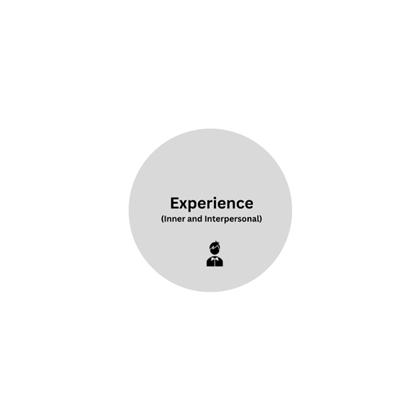
Figure 2 – To-be view of experience (WICKET)
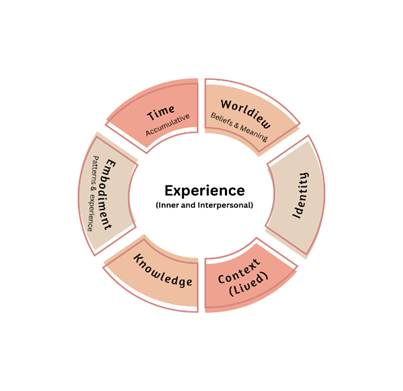
Figure 2 – To-be view of self experience
As a consequence of this re-rooting, the implications for relationships and education become clearer because it expands the scope of relational understanding. Rather than seeing relationships as universal and decontextualised, we begin to see them more broadly, encompassing the multiplicity of relationships we hold with each other (for example, across gender, survival states, ultimate beliefs, embodied experiences, neurodiversity, and political viewpoints) as well as our relationships with groups, technology, the more-than-human world, and the planet itself. I refer to this as relational or empathic scope (Ahmad, 2025, pg. 176).
By standardising the professional culture around an agreed model that is embedded in the relationship, we create a common language for systematically identifying and addressing gaps in the foundational areas of helping, self-development, skills, practice, and relational work. Furthermore, it aligns naturally with the principles of relational ethics.
The hope is that once this shift in mindset takes root, it translates into everyday practice, group relationships, education, assessment, and organisational processes such as EDI, ultimately influencing the wider training environment. The very nature of building good relationships. I call this view of relationships “The relationship v2.0”.
I hope that gives a flavour of what is possible and perhaps whets the appetite to explore further.
- What was your main goal / hope when writing this book?
The goal of the book is to significantly influence the practice of helping and mainstream counselling and psychotherapy across the culture of the profession. It is not just an introduction to counselling and psychotherapy book; at its core, it is advocating for the whole population.
It expands the base of knowledge so that our common ground is inclusive by design, intentionally incorporating vulnerable communities as well as underserved and underrepresented groups. To truly understand the needs of the whole population, it must account for all groups, whether veterans, older people, or individuals with protected characteristics.
In essence, it is a call to action. It takes what we already have, without changing it, and adds the layers that are often overlooked. It is not a radical transformation of core practice but an augmentation that strengthens what we already do so that it works for everyone.
Early signs are good. A number of training organisations have already adopted it or are currently assessing it. For example, the renowned worldwide NAOS Institute has announced a new training program in Psychosexual and Relationship Therapy. NOAS alongside London Diploma in Psychosexual and Relationship Therapy are endorsing a new training course entitled the London Diploma in Psychotherapy and Relational Healing [see 2] due to start in September 2026. My hope is that the profession will adopt the whole embedded relational model, build upon it, and continue to evolve it.
- Do you have a favourite quote from this book?
Not a quote per se, but I do have a few new terms I conceived: relational or empathic scope, embodied prejudice, and also associated terms empathic loss, contextual empathy and empathic lag (Ahmad, 2025). We often think of the feelings beneath the surface in relating and relationships, but relational scope highlights that relationships can be seen as a multiplicity of parts, each with its own dynamics, some of which may be closed off. This includes the categories outlined in the self-view model (WICKET), as well as relationships with institutions, civic systems, social and community groups, the more-than-human world, and the planet.
A decontextualised and singular human lens may capture human-level experience but does not provide a complete understanding of the many dynamics within relationships. Furthermore, if we don’t have base knowledge of own and client’s context (as well as skills to open exploration), then the client may experience “empathic loss or lag” because the therapist does not have base understanding of difficulties especially for people who have a difference that is “Othered”, different, invisible, or discriminated against in society. Therefore, the relationship is not knowledgeless.
Furthermore, we may be able strive to accept a client, but we may feel embodied defences and anxieties at the same time, thus the term embodied prejudice (e.g., anxiety, fear, aversion, freeze, disgust) which act as barriers to relating or exploring “difference”, identity and marginalisation experiences (e.g., with visibly disabled, older people, homeless, working-class, trans, lesbian, or global majority clients). Embodied prejudice exists when these responses are not similarly produced in relation to a person who belongs to their own group or a dominant or majority group identity, e.g., non-disabled, cis gender client. It moves us away from thinking bias as cognitive or cognitive acceptance is enough.
These terms provide a more complete understanding of barriers in relating, exploring and understanding a client’s world, and in being reflexive in separating own context, from that of the client.
6. What book is currently on your bedside table?
Yellowface by R.F. Kuang. Coincidentally, it’s the first book I’ve read since finishing my own book and is about the struggles of an author writing a book. It was thrust on me last minute recommendation before going on holiday. It’s a crime, black comedy and serious narrative about the competition, fame and power. It follows a struggling author whose longtime friend, a highly successful writer, dies unexpectedly. Seizing an unpublished manuscript left behind at the scene, the friend publishes it as their own. No spoilers.
7. What do you like to do when you’re not writing?
Outside of family and friends, Wing Chun martial arts, which originated from Shaolin martial arts, is a central part of my life for over 15 years and has really helped me achieve balance and manage my stress and recondition my nervous system under real pressure.
Book available with 20% off (code CISYCNICP20) at Routlege: https://www.routledge.com/A-New-Introduction-to-Counselling-and-Psychotherapy-Embedding-Context-Diversity-and-Equity-into-Practice/Ahmad/p/book/9781032805931
For training provider inspection copies, CPD enquiries, affordability copies, and solution resources email: newintro@tadf.co.uk / tadf.co.uk.
—
References and link
[1] https://www.tadf.uk/courses/wep
Ahmad, M. (2025) A New Introduction to Counselling and Psychotherapy: Embedding Context, Diversity, and Equity into Practice. 1st edn. London: Routledge. ISBN 9781032805931
Biography
Mamood Ahmad (he/him) is a therapist, lecturer, speaker, and Whole Practice Relational consultant, as well as the founder of The Anti-Discrimination Focus (#TADF) community. Established in 2020, this community aims to promote equity by design within the educational foundations of therapeutic practice. As a NCPS and UKCP therapist with nearly two decades of experience in private practice, with specialisms in trauma, multicultural competence and social change, his primary focus now is professional standards change, which is the central rationale for this book.
For training provider inspection copies, CPD enquiries, affordability copies, and solution resources email: newintro@tadf.co.uk.Tell us about your book.
It’s called A New Introduction to Counselling and Psychotherapy: Embedding Context, Diversity, and Equity into Practice. It’s a bit of a long title, but it reflects the book’s scope. It’s a comprehensive (nearly 500-page) and practical textbook that offers a mainstream introduction to personal and professional development, theory, skills, practice, and advocacy in counselling and psychotherapy. It’s for all helpers, students, lecturers and therapists, but it’s primarily positioned for use by students and tutors during initial training.
What makes it unique and the first of its kind is that it embeds client self-context, culture, difference, and diversity, as well as personal and social context, throughout every aspect of learning and practice. It is mapped to SCoPEd competencies and to fulfil the requirement to embed context, diversity, and difference across the curriculum and professional practice. Up until now, there has not been a clear ground model for how to do this in a systematic way. This book offers a solution by providing both an architecture and a full curriculum for an embedded approach that strengthens the very foundations of knowledge, practice, and the therapeutic relationship.
Rather than treating areas such as identity, difference, social and personal context, culture, neurodiversity, embodiment, knowledge, worldviews, power dynamics, intersectionality, and trauma- and harm-informed practice as separate or secondary, the book weaves them into the core of therapeutic understanding and skill. This means equity, diversity, and inclusion (EDI/DEI) are built in by design, not added on afterwards, but upfront at the beginning. As well a model for an embedded curriculum it also includes a blueprint and practical “quick win” transition plan to help training providers adopt an embedded approach to the curriculum.
Ultimately, it is a book about care and love for us and each other, and about reimagining therapy and relationships on a sustainable, inclusive foundation that truly fits today’s world.
- How long has your book been in the making? Was there a pivotal moment that inspired you to write this book?
Collectively, you could say the book has been in the making since the early development of helping and psychotherapy models in the 1950s, shaped by the efforts of many communities and individuals who critique the assumption that theory can be applied universally to all people, rather than explicitly recognising the vast variety of contexts in which we live and which shape our experiences. It has been something of an open secret for many decades that the areas I mentioned earlier are often partitioned off and treated as add-ons, or worse, as optional. Therefore, I genuinely believe that if I hadn’t written this book, someone else eventually would have.
For me personally, the origins of the idea go back to 2021, when I launched The Anti-Discrimination Focus (#TADF), a community collaboration aimed at improving the initial standards of counselling and psychotherapy education. The purpose was to gather a broad understanding of the gaps in training, proficiency, and student experience, particularly in relation to the needs of specific groups, and to address them comprehensively. The research and ideas behind the book are therefore grounded in my experiences as a course tutor, therapist, being in community, and specialist in cultural “competence” and social change, and critically in supporting training providers to design curricula that are fully embedded and inclusive.
In the summer of 2023, I rather reluctantly revisited the idea of creating a new kind of introductory book for counselling and psychotherapy. I was initially hesitant to pursue it because of the significant personal and family energy it would require. However, introductory texts in this field shape the foundational culture of the profession, and writing a new one has the potential to catalyse change at individual, institutional, and ultimately systemic levels. By offering a practical solution and modelling the kind of embedded curriculum we want to see, the book serves therapists, training providers, and professional standards bodies alike. So, in essence, it is both a new introduction to counselling and psychotherapy and an advocacy book for the profession.
It took two years of work, and initial signs are strong (the first print run sold out in three weeks), but only time will tell whether book has any significant influence.
- Can you give us a feel for the solution for a stronger, enriched equity by design, curriculum and practice?
I’ll try to make this as concise as possible. A more comprehensive outline of the solution can be accessed for free as CPD (see [1]) as well as comprehensive framework models, as it takes several steps to explain fully.
A good starting point is how we embed our understanding of ourselves, our clients, and, more broadly, human beings and the worlds we live in, right from the very start of our education, ideally from day one of primary school. This forms the root view of the whole self as having a variety of inner and interpersonal experiences which are formative and influenced by contexts we live in. Figure 1 describes the current perspective and Figure 2 is what we need to move towards to be able to achieve equity and wholeness by design. At a high-level, contexts are formalised as Worldview, Identity, Context (Lived), Knowledge, Embodiment and Time (Payload) – use WICKET as a way of remembering. They are high-level categories that influence experiences, the categories are derived from around 60 lower-level dimensions mostly from secondary practices like cultural competence, social context, community knowledge, as well as difference and diversity, and grouped for usability.
Figure 1 – As-is view of experience

Figure 2 – To-be view of experience (WICKET)
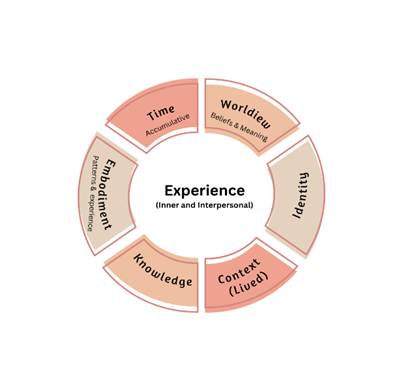
Figure 2 – To-be view of self experience
As a consequence of this re-rooting, the implications for relationships and education become clearer because it expands the scope of relational understanding. Rather than seeing relationships as universal and decontextualised, we begin to see them more broadly, encompassing the multiplicity of relationships we hold with each other (for example, across gender, survival states, ultimate beliefs, embodied experiences, neurodiversity, and political viewpoints) as well as our relationships with groups, technology, the more-than-human world, and the planet itself. I refer to this as relational or empathic scope (Ahmad, 2025, pg. 176).
By standardising the professional culture around an agreed model that is embedded in the relationship, we create a common language for systematically identifying and addressing gaps in the foundational areas of helping, self-development, skills, practice, and relational work. Furthermore, it aligns naturally with the principles of relational ethics.
The hope is that once this shift in mindset takes root, it translates into everyday practice, group relationships, education, assessment, and organisational processes such as EDI, ultimately influencing the wider training environment. The very nature of building good relationships. I call this view of relationships “The relationship v2.0”.
I hope that gives a flavour of what is possible and perhaps whets the appetite to explore further.
- What was your main goal / hope when writing this book?
The goal of the book is to significantly influence the practice of helping and mainstream counselling and psychotherapy across the culture of the profession. It is not just an introduction to counselling and psychotherapy book; at its core, it is advocating for the whole population.
It expands the base of knowledge so that our common ground is inclusive by design, intentionally incorporating vulnerable communities as well as underserved and underrepresented groups. To truly understand the needs of the whole population, it must account for all groups, whether veterans, older people, or individuals with protected characteristics.
In essence, it is a call to action. It takes what we already have, without changing it, and adds the layers that are often overlooked. It is not a radical transformation of core practice but an augmentation that strengthens what we already do so that it works for everyone.
Early signs are good. A number of training organisations have already adopted it or are currently assessing it. For example, the renowned worldwide NAOS Institute has announced a new training program in Psychosexual and Relationship Therapy. NOAS alongside London Diploma in Psychosexual and Relationship Therapy are endorsing a new training course entitled the London Diploma in Psychotherapy and Relational Healing [see 2] due to start in September 2026. My hope is that the profession will adopt the whole embedded relational model, build upon it, and continue to evolve it.
- Do you have a favourite quote from this book?
Not a quote per se, but I do have a few new terms I conceived: relational or empathic scope, embodied prejudice, and also associated terms empathic loss, contextual empathy and empathic lag (Ahmad, 2025). We often think of the feelings beneath the surface in relating and relationships, but relational scope highlights that relationships can be seen as a multiplicity of parts, each with its own dynamics, some of which may be closed off. This includes the categories outlined in the self-view model (WICKET), as well as relationships with institutions, civic systems, social and community groups, the more-than-human world, and the planet.
A decontextualised and singular human lens may capture human-level experience but does not provide a complete understanding of the many dynamics within relationships. Furthermore, if we don’t have base knowledge of own and client’s context (as well as skills to open exploration), then the client may experience “empathic loss or lag” because the therapist does not have base understanding of difficulties especially for people who have a difference that is “Othered”, different, invisible, or discriminated against in society. Therefore, the relationship is not knowledgeless.
Furthermore, we may be able strive to accept a client, but we may feel embodied defences and anxieties at the same time, thus the term embodied prejudice (e.g., anxiety, fear, aversion, freeze, disgust) which act as barriers to relating or exploring “difference”, identity and marginalisation experiences (e.g., with visibly disabled, older people, homeless, working-class, trans, lesbian, or global majority clients). Embodied prejudice exists when these responses are not similarly produced in relation to a person who belongs to their own group or a dominant or majority group identity, e.g., non-disabled, cis gender client. It moves us away from thinking bias as cognitive or cognitive acceptance is enough.
These terms provide a more complete understanding of barriers in relating, exploring and understanding a client’s world, and in being reflexive in separating own context, from that of the client.
6. What book is currently on your bedside table?
Yellowface by R.F. Kuang. Coincidentally, it’s the first book I’ve read since finishing my own book and is about the struggles of an author writing a book. It was thrust on me last minute recommendation before going on holiday. It’s a crime, black comedy and serious narrative about the competition, fame and power. It follows a struggling author whose longtime friend, a highly successful writer, dies unexpectedly. Seizing an unpublished manuscript left behind at the scene, the friend publishes it as their own. No spoilers.
7. What do you like to do when you’re not writing?
Outside of family and friends, Wing Chun martial arts, which originated from Shaolin martial arts, is a central part of my life for over 15 years and has really helped me achieve balance and manage my stress and recondition my nervous system under real pressure.
Book available with 20% off (code CISYCNICP20) at Routlege: https://www.routledge.com/A-New-Introduction-to-Counselling-and-Psychotherapy-Embedding-Context-Diversity-and-Equity-into-Practice/Ahmad/p/book/9781032805931
For training provider inspection copies, CPD enquiries, affordability copies, and solution resources email: newintro@tadf.co.uk / tadf.co.uk.
—
References and link
[1] https://www.tadf.uk/courses/wep
Ahmad, M. (2025) A New Introduction to Counselling and Psychotherapy: Embedding Context, Diversity, and Equity into Practice. 1st edn. London: Routledge. ISBN 9781032805931
Biography
Mamood Ahmad (he/him) is a therapist, lecturer, speaker, and Whole Practice Relational consultant, as well as the founder of The Anti-Discrimination Focus (#TADF) community. Established in 2020, this community aims to promote equity by design within the educational foundations of therapeutic practice. As a NCPS and UKCP therapist with nearly two decades of experience in private practice, with specialisms in trauma, multicultural competence and social change, his primary focus now is professional standards change, which is the central rationale for this book.
For training provider inspection copies, CPD enquiries, affordability copies, and solution resources email: newintro@tadf.co.uk.

 The Wholeness Solution for Training, Curricula & Practice